Trains in Germany
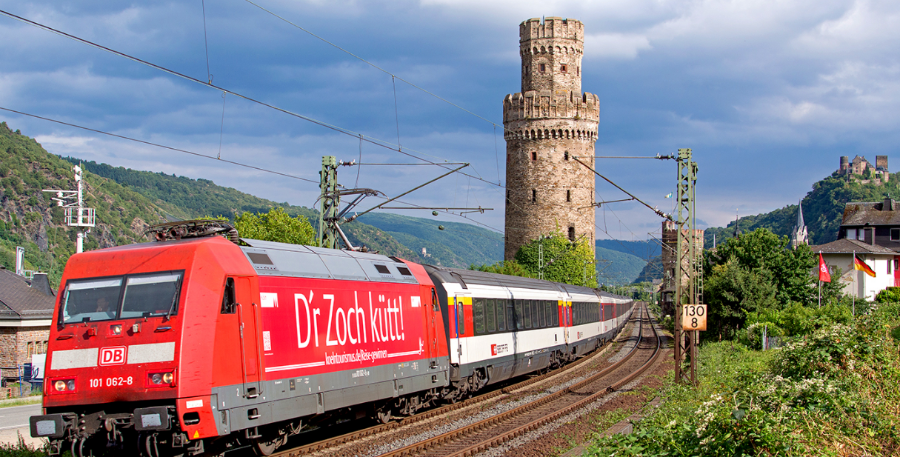
Deutsche Bahn (DB), the official German Railway company, operates one of the most comprehensive and modern rail networks in Europe. Serving as the main infrastructure owner across the country, DB makes it seamless to travel between historic towns, scenic valleys, and bustling metropolitan hubs.
🚄 Types of Trains in Germany
Domestic High-Speed Trains
- InterCity Express (ICE): The flagship high-speed fleet traveling up to 186–200 mph (300–320 kph). They connect all major urban centers and feature free Wi-Fi, power sockets, and an on-board restaurant car.
- ICE Sprinter: Extra-fast, non-stop ICE variants designed primarily for business travelers during peak morning and evening commuting hours. They bridge massive hubs like Berlin, Frankfurt, Hamburg, and Cologne with maximum efficiency.
- ICE T: Specialized tilting trains that run on tracks not originally optimized for standard high-speed rail, shaving travel times down to secondary cities.
Regional & Commuter Trains
- Regional-Express (RE) & Interregio-Express (IRE): Semi-fast regional trains connecting major cities to surrounding local destinations with selective stops.
- Regionalbahn (RB): Standard local trains that stop at every single station and town along a route.
- S-Bahn: Rapid transit suburban commuter rail systems operating within major metropolitan networks like Munich, Berlin, and Frankfurt.
InterCity & International Networks
- InterCity (IC) & EuroCity (EC): Long-distance trains traveling up to 124 mph (200 kph). IC operates domestically, while EC crosses international borders.
- International HSR: High-speed extensions including Austria's RailJet, France's TGV, and Eurostar (formerly Thalys) lines.
- Night Trains: Overnight sleeper networks connecting Germany to key neighbors like Austria, Italy, Switzerland, and the Netherlands.
⏱️ Travel Times Between Major Cities
Thanks to the high-speed ICE corridors, getting between Germany's primary hubs is incredibly fast:
Route | Average ICE Duration | Type of Connection |
|---|---|---|
Frankfurt ↔ Cologne | ~50 mins to 1 hour | Direct High-Speed Line |
Hamburg ↔ Berlin | 1 hour 42 minutes | High-Speed Corridor |
Frankfurt ↔ Munich | 3 hours 00 minutes | ICE Sprinter Route |
Berlin ↔ Frankfurt | 3 hours 30 minutes | Main Hub Connector |
Munich ↔ Berlin | 3 hours 53 minutes | Express Corridor |
Dortmund ↔ Berlin | 3 hours 22 minutes | East-West Corridor |
🎟️ Seat Reservations & Rules
For most domestic travel within Germany, seat reservations are entirely optional. You can simply board a train with your rail pass or ticket and claim any unreserved seat.
- How to Spot Empty Seats: Every long-distance train (ICE/IC) features digital LED displays above or on the seats. If a seat is reserved, it will list the station segments (e.g., Frankfurt - München); if it is blank, the seat is completely free to sit in.
- Reservation Costs: If you prefer guaranteed peace of mind during peak holiday seasons, Friday afternoons, or Monday mornings, you can add a standalone reservation through Deutsche Bahn. It costs €5.50 for 2nd Class and €6.90 for 1st Class.
- When Reservations Are Mandatory:
- International Routes: Cross-border trains going into France (TGV/ICE) require mandatory seat bookings year-round.
- Summer Peaks: Certain international summer routes (such as routes connecting to the Netherlands or seasonal cross-border lines) implement mandatory seat configurations between June and September.
- Night Trains: Nightjet and sleeper compartments strictly require a reservation alongside your rail pass.
🗺️ Scenic Train Routes
If you want to trade high-speed transit for pure sightseeing, make sure to use your pass on these iconic lines:
- The Rhine Valley Line: Runs between Bonn, Koblenz, and Mainz, taking you right past towering castles, vineyard terraces, and the famous Lorelei rock.
- The Black Forest Line: Connects Offenburg to Konstanz (Lake Constance), cutting through dense pine woods and deep mountain valleys.