Trains in Switzerland
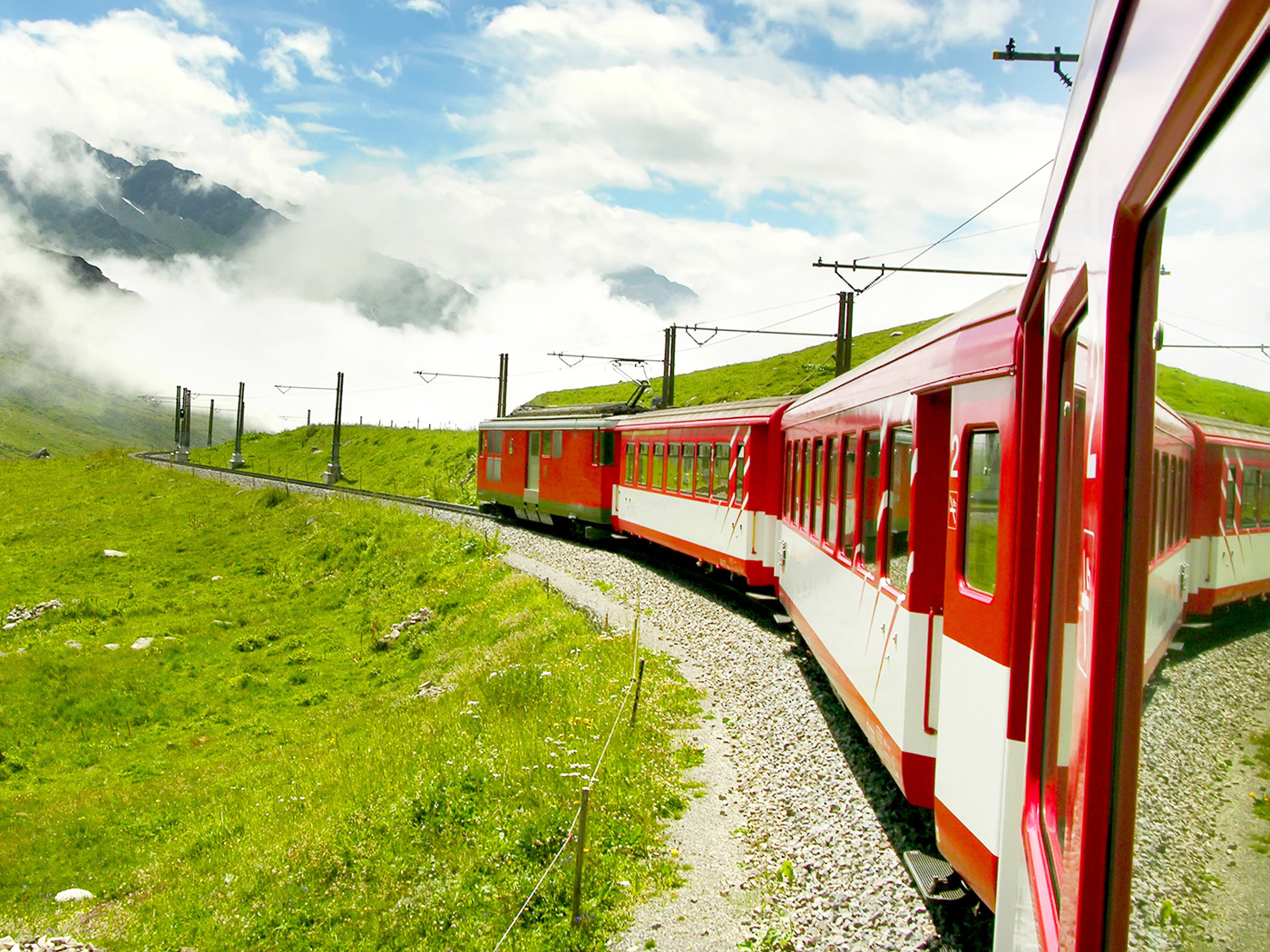
Trains in Switzerland are known worldwide for their efficiency, punctuality, and breathtaking panoramic views. The network is operated primarily by the state-run Schweizerische BundesBahn (SBB)—also referred to as CFF or FFS depending on the language region. Operating on a synchronized "clock-face" timetable, trains depart at regular, identical intervals every hour, making scheduling effortless for travelers.
⏱️ Travel Times Between Major Cities
Switzerland’s integrated rail system enables fast, direct city-to-city transfers. Below are the typical travel times and frequencies on the most popular domestic routes via SBB InterCity (IC) trains:
Route | Average Travel Time | Frequency | Direct Train? |
|---|---|---|---|
56 minutes | Every 30 mins | Yes | |
2 hours 44 minutes | Every 30 mins | Yes | |
53 minutes | Every 30 mins | Yes | |
41 minutes | Every 30 mins | Yes | |
1 hour 53 minutes | Every 60 mins | Yes | |
1 hour 44 minutes | Every 30 mins | Yes | |
52 minutes | Every 30 mins | Yes | |
56 minutes | Every 30 mins | Yes | |
1 hour 49 minutes | Every 60 mins | Yes (Scenic Express) |
💺 Seat Reservations: Do You Need One?
Unlike many other European nations, seat reservations are optional and rarely used on regular domestic Swiss trains. The general rule is simple: buy your ticket or activate your Interrail Global or Swiss Travel Pass, hop on the train, and sit in any open seat within your designated carriage class (1st or 2nd class).
Note: Non European Citizens can only travel on Interrail Global Pass or the Swiss Travel Pass, EU Citizens can purchase an Interrail Switzerland Pass.
Note: Non European Citizens can only travel on Interrail Global Pass or the Swiss Travel Pass, EU Citizens can purchase an Interrail Switzerland Pass.
Domestic Trains (Optional)
If you are traveling with a group during peak commuter hours or heavy summer tourist periods, you can choose to make an optional reservation on standard InterCity (IC) trains.
- Cost: CHF 5 per seat, per train.
- How to book: Reservations can be completed up to a few minutes before boarding using the official SBB Mobile app or via the SBB Desktop Portal.
Panoramic Touristic Trains (Mandatory)
While standard regional trains don't require them, Switzerland's iconic, highly-sought-after tourist lines strictly require seat reservations and an accompanying supplement fee, even if you hold a valid rail pass:
- Glacier Express: (St. Moritz ↔ Zermatt) — Mandatory fee ranges from CHF 44 to CHF 49 depending on the season.
- Bernina Express: (Chur/St. Moritz ↔ Tirano) — Mandatory fee ranges from CHF 20 to CHF 36.
- Gotthard Panorama Express: (Lucerne ↔ Lugano) — Mandatory fee is CHF 16.
- GoldenPass Express: (Montreux ↔ Interlaken) — Reservation is optional but highly recommended (CHF 20).
International and Night Trains (Mandatory)
If you cross Swiss borders using high-speed rail lines or night services, reservations are generally mandatory and built into your ticket pricing:
- TGV Lyria (to France) & EuroCity (EC) (to Italy): Compulsory.
- ICE (to Germany) & Railjet (RJ) (to Austria): Highly recommended but optional during the day.
- Nightjet (NJ) / EuroNight (EN): Compulsory for all couchette, sleeper, or seated compartments.
🚂 Domestic Train Types
- InterCity (IC) & InterCity Tilting (ICN): Express, double-decker, or high-speed tilting trains linking major hubs like Geneva, Zurich, Bern, and Basel with minimal stops.
- InterRegio (IR): Fast trains connecting major regions but making more frequent intermediate stops than an IC train.
- RegioExpress (REX) & Regio (R): Localized commuter lines linking major hubs to smaller towns and villages, stopping at almost every station.
- S-Bahn: Highly efficient urban light-rail networks surrounding primary metropolises for seamless city transit.