Trains in Belgium
Trains in Belgium
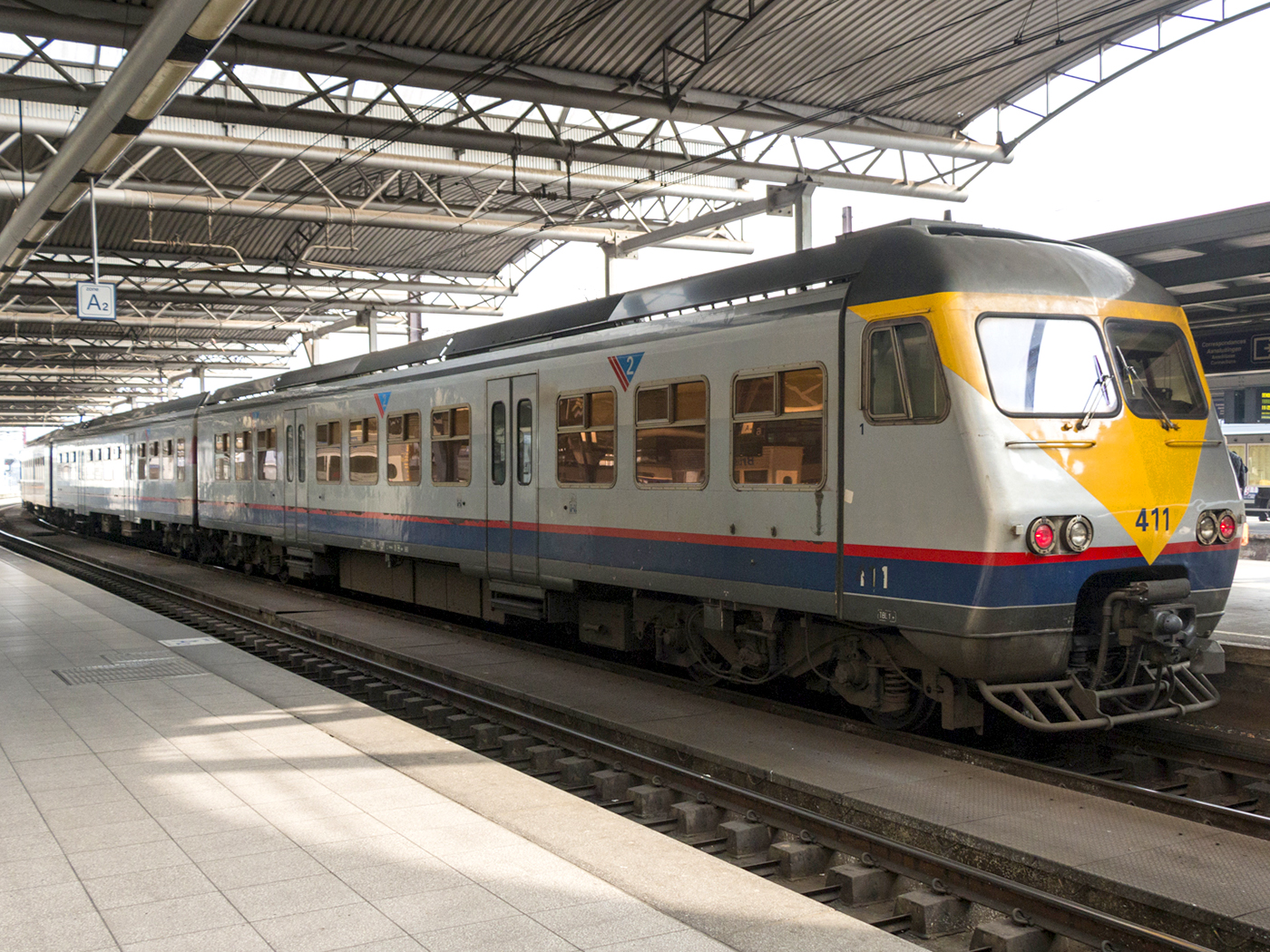
Belgium’s compact size and dense rail network make train travel the easiest way to explore the country. The national rail operator is SNCB/NMBS (short for Société Nationale des Chemins de fer Belges in French and Nationale Maatschappij der Belgische Spoorwegen in Dutch), commonly referred to simply as SNCB.
Domestic and International Train Types
- InterCity (IC) Trains. These fast, direct trains connect major Belgian cities like Brussels, Bruges, Ghent, Antwerp, and Liège, as well as cross-border destinations in the Netherlands, Germany, and Luxembourg.
- Local (L) and Suburban (S) Trains. Local trains connect cities while stopping at every small town along the route, while S-trains operate suburban commuter lines around major hubs like Brussels and Antwerp.
- Peak (P) Trains. These additional commuter trains run exclusively during morning and late afternoon weekday rush hours to supplement regular service.
- International High-Speed Trains. Belgium is a major hub for high-speed rail, including Eurostar (formerly Thalys, linking Brussels with London, Paris, Amsterdam, and Cologne), TGV INOUI (to France), ICE (to Germany), and EuroCity (EC) trains (to the Netherlands, Luxembourg, and Switzerland).
Train Travel Times Between Major Cities
Thanks to frequent departures—often every 15 to 30 minutes on core corridors—you can easily take day trips from Brussels or hop between historic cities on direct InterCity (IC) trains.
Route | Average Travel Time | Service Type |
|---|---|---|
28 – 35 minutes | Direct (IC) | |
35 – 41 minutes | Direct (IC) | |
25 – 41 minutes | Direct (IC) | |
55 minutes | Direct (IC) | |
54 minutes – 1 hr 01 min | Direct (IC) | |
56 minutes | Direct (IC) | |
1 hr 01 min | Direct (IC) | |
1 hr 17 min | Direct (IC) | |
1 hr 25 min | Direct (IC) |
Seat Reservations in Belgium
Whether you are traveling with point-to-point tickets or a Eurail/Interrail Pass, reservation rules depend on whether your train is domestic or international.
- Domestic Belgian Trains (IC, L, S, P). Seat reservations are not required and not possible. You simply board any train on your route with a valid ticket or activated rail pass day and sit in any open seat in your ticketed class.
- Eurostar and TGV INOUI. Seat reservations are mandatory for all passengers, including rail pass holders. Passholder seat quotas are limited and carry an extra fee (typically €20–€38 depending on route and class), so book well in advance via SNCB International or the Interrail/Eurail Reservation Service. (Note: Rail passes are not valid on Eurostar trains for purely domestic trips between Brussels, Antwerp, and Liège).
- ICE Trains (to Germany). Reservations are optional for most of the year (around €5–€6), though they become mandatory during the peak summer travel season (June through August) for cross-border journeys.
- EuroCity (EC) and Cross-Border Regional Trains. Reservations are not required on EuroCity Direct/EuroCity trains between Brussels and the Netherlands, or on local cross-border trains into Lille (France) and Luxembourg.